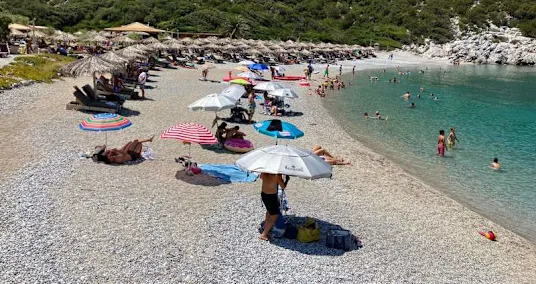
Greece and Cyprus are feeling the effects of the war in the Middle East as the holiday season approaches, with uncertainty over rising costs and economic developments causing concern across the hotel sector.
In Athens, industry representatives are observing a noticeable slowdown in reservations.
Travel agencies and hoteliers say many holidaymakers are hesitating and waiting to see how the situation develops.
Greek Tourism Minister Olga Kefalogianni spoke late last week of the psychological burden caused by the war, but also suggested that holidaymakers may concentrate on destinations considered safe — including Greece, which lies far from the actual crisis region.
Cyprus in contrast is closer to the conflict region and has experienced its effects directly: in early March, an Iranian-made drone struck the British RAF Akrotiri airbase near Limassol, causing minor damage.
The government in Nicosia has launched a package worth €200 million ($230 million) to cushion the economic consequences of the Middle East crisis.
In April, 30% of the wages of employees in hotels and other holiday accommodation will be covered. The government is also planning support for airlines.
Cypriot Tourism Minister Kostas Koumis said that the drop in tourist arrivals from several important markets such as Israel and several Arab states was particularly problematic.
LATEST POSTS
- 1
 What is IDF's view on pontential long-term occupation of southern Lebanon?
 - 2The moon up close: How the Artemis 2 astronauts are photographing their historic lunar flyby
- 3Exploring the Gig Economy: Examples from Consultants
- 4Why this Iranian island looks like Mars after it rains
- 5Bitcoin momentum builds in Abu Dhabi as global interest surges


- Scientists solve the mystery of the prehistoric 'Burtele Foot'
- ISS astronaut snaps stunning nighttime photo of Florida and Cuba | Space photo of the day for Dec. 29, 2025
- Shredded cheese recall: Multiple brands sold at Aldi, Target and Walmart affected over potential metal fragment contamination
- Which Instax Camera Would it be a good idea for you to Purchase?
- Netanyahu expects Iran's leadership to fall
- Wegmans recalls mixed nuts over salmonella contamination fears
- How a niche Catholic approach to infertility treatment became a new talking point for MAHA conservatives
- Tech giants accused of not complying with Australian social media ban
- A Manual for SUVs with Less Noteworthy Gas Mileage