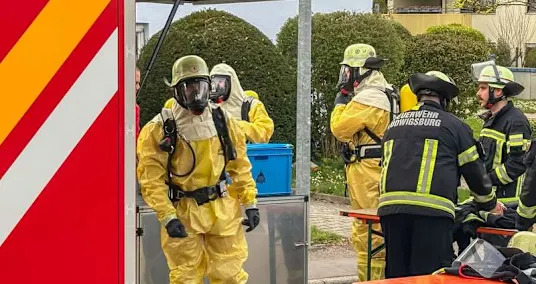
An Easter egg hunt in south-western Germany took a worrying turn on Sunday when two men discovered a vial labelled "Polonium 210" in a garden, triggering an emergency response as authorities tested for the potentially lethal radioactive substance.
District fire chief Andy Dorroch said initial on-site measurements were carried out to detect radioactivity, but all of them came back negative. He added that the two men were unharmed.
The discovery led to a large-scale operation involving the fire brigade and police in the town of Vaihingen an der Enz, north-west of Stuttgart.
It remains unclear whether the 50-millilitre vial actually contained polonium 210.
The fire brigade will secure the vial in accordance with safety precautions, the fire chief said.
Reports said the area around the site where the bottle was found was cordoned off.
According to the Federal Office for Radiation Protection (BfS), the chemical element polonium is particularly dangerous if inhaled or absorbed through the skin via open wounds.
LATEST POSTS
- 1
 Solid Living Tips: Experiences from a Wellness Fan
 - 2Putting pig organs in people is OK in the US, but growing human organs in pigs is not – why is that?
- 3'Sex and the City' star Kim Cattrall marries longtime partner Russell Thomas in intimate London wedding
- 46 Fledgling Cameras for 2024: Ideal for New Photographic artists
- 5Figure out How to Streamline Your Profits in Gold Speculation



- Are multiverses real? An astrophysicist explains why it depends on how you define ‘real’
- French Senate debates social media ban for under-15s
- Taylor Swift just released the 'Elizabeth Taylor' music video — but she's not the star of it
- Criminal Guard Lawyer Expenses: What Would it be advisable for you to Hope to Pay?
- Who plays Moana in the live-action remake? What to know about Catherine Lagaʻaia.
- Artemis 2 astronauts — now halfway to the moon — report 'burning smell' from toilet, but everything's fine
- 1st human missions to Mars should hunt for signs of life, report says
- Deaths reported in Lebanon as Israel and Hezbollah exchange attacks
- A Manual for Pick Viable Psychological well-being Backing Administrations In 2024