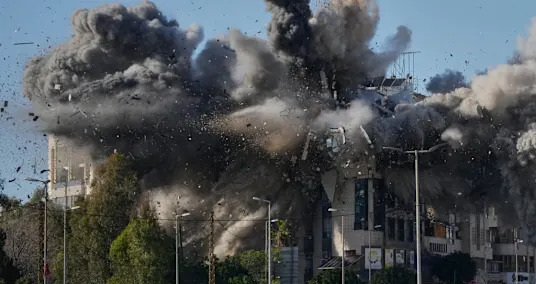
The US-Israel war on Iran and its ripple effect throughout the Middle East have had a devastating impact on Arab countries, with millions expected to slide into poverty, according to the United Nations.
A UN Development Programme (UNDP) report published on Tuesday said that gross domestic product (GDP) in the region was estimated to decline by approximately 3.7 to 6 percent after a month of war, equivalent to a contraction of $120bn to $194bn.
Abdallah Al Dardari, UN assistant secretary-general and director of the UNDP Regional Bureau for Arab States, said that 3.7 million jobs will be lost and about four million more people in the region could fall below the poverty line, noting that the war had highlighted the “fragility in the Arab economy”.
The report was based on projections of “a short but intense conflict lasting for four weeks”, signalling that the impact of the war, which has seen Iran attacking Gulf energy infrastructure and squeezing oil and gas exports through the Strait of Hormuz, will likely be even higher if it drags on longer.
Issued as tight oil supplies pushed Brent crude futures up 4.7 percent to more than $118 per barrel, the report said, “risks in strategic maritime corridors” had “knock‐on effects on inflation, trade flows, and global supply chains” that could undermine livelihoods in the Middle East’s “interconnected economies”.
It added that increases in poverty rates were “concentrated in the Levant and fragile countries (Sudan and Yemen), where baseline vulnerability is highest and shocks translate more strongly into welfare losses”.
The report noted that Lebanon, dragged into the war after Hezbollah struck Israel in retaliation for the US-Israeli killing of Iran’s Supreme Leader Ayatollah Ali Khamenei on February 28, is especially impacted, with “ongoing air strikes and evacuation orders … already causing widespread destruction of residential areas, transport infrastructure, and public services, alongside large‐scale displacement”.
“We hope the fighting will stop tomorrow, as every day of delay has negative repercussions on the global economy,” said Al Dardari.
LATEST POSTS
- 1
 Scientists dove hundreds of feet into the ocean and found creatures no human has ever seen. Our trash beat us there
 - 2Embracing Practical Living and Ecological Protection
- 3The Best Internet based Courses for Expertise Improvement
- 45 Family SUVs for 2024: Which One Accommodates Your Family's Needs\uff1f
- 5Glen Powell will host 'Saturday Night Live' with Olivia Dean as musical guest: What to know ahead of their debut


- 6 Vehicle Rental Administrations: Pick Your Ideal Ride
- The most effective method to Promoter for Cutthroat Medical attendant Compensations in Your Medical services Office
- RFK Jr. guts the US childhood vaccine schedule despite its decades-long safety record
- Decrease in Home Buy Credits and Home loan Renegotiating Rates: An Outline of Latest things
- If someone's always late, is it time blindness, or are they just being rude?
- Mechanical Sidekick d: A Survey of \Elements and Execution d\ Cell phone
- German finance minister sees advantages of smartphones in schools
- The Best Traditional Music Arrangers in History
- Help Your Efficiency with These Work area Updates


